
How Many Sessions Does Laser Tattoo Removal Take?
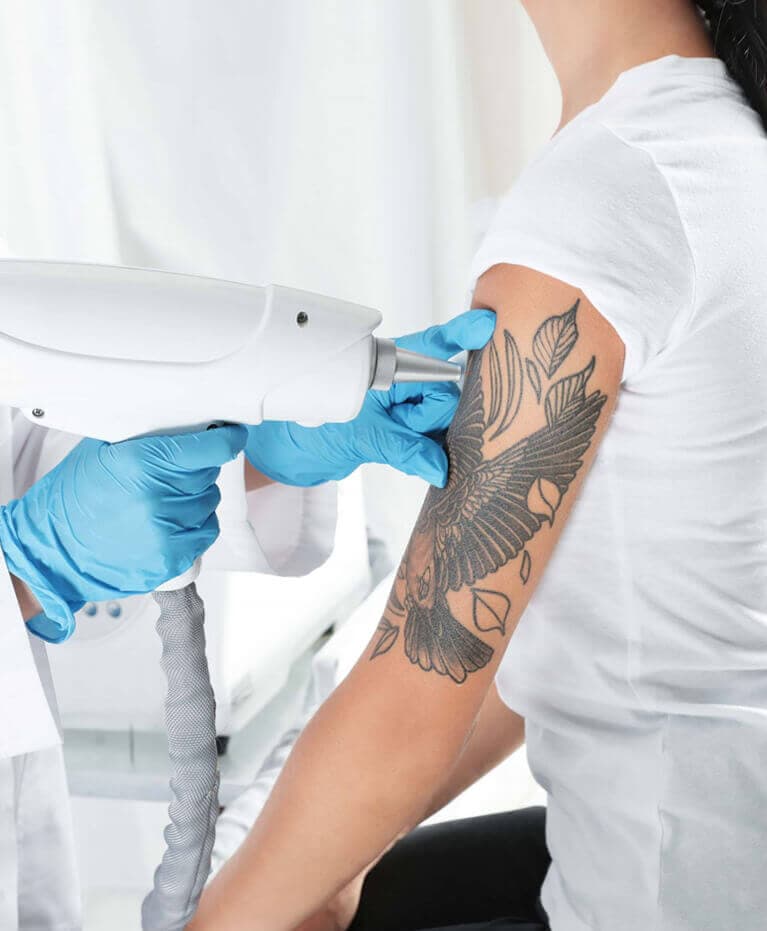
It is the first question almost everyone asks, and the honest answer is: it depends. Anyone who quotes you an exact number before looking at your tattoo is guessing. Tattoos vary widely in ink, depth, size, and location, and so do the people wearing them. What we can do is walk you through the factors that shape the timeline, so you arrive at your consultation knowing what to expect.
If you are asking how many laser tattoo removal sessions you’ll likely need, think of it as a range with several moving parts, not a single figure. Most tattoos require multiple visits spaced weeks apart, and your provider will estimate the number after examining the tattoo in person.
How Laser Tattoo Removal Works
Tattoo ink sits in the dermis, the layer of skin below the surface. A laser delivers very short energy pulses that break the ink into tiny fragments. Over the next few weeks, your body’s immune system gradually clears those fragments. That clearing process is why you can’t rush treatment: each session breaks up ink, and your body needs time to do its part.
This is also why tattoo removal sessions are spaced out. Treating the same area again too soon doesn’t speed things up and can increase the risk of irritation or skin changes. Your provider will advise on the right interval for your skin.
Factors That Affect Tattoo Removal Sessions
There are numerous factors that determine the success and duration of your tattoo removal sessions, including:
Ink color
Black ink absorbs most laser wavelengths, so it tends to respond most readily. Blues and greens can take longer. Yellows, light greens, whites, and pastels are often the most stubborn because they absorb less energy. Multi-color tattoos usually require more planning than a single black outline.
Size and location
A small tattoo has less ink to clear than a large piece. Location matters because blood flow and lymphatic drainage help the body remove fragments. Tattoos closer to the heart, such as on the chest or upper arm, often fade differently than those on the ankles, hands, or feet, where circulation is typically slower.
Depth and density
Professional tattoos tend to use more ink, packed more densely and placed deeper than amateur work. Amateur tattoos can be patchy and shallower, so they may respond differently. Layering from cover-up work or previous tattoos adds complexity.
Age of the tattoo
Older tattoos often fade somewhat on their own, which can make treatment more manageable. Newer tattoos may hold more concentrated ink.
Your skin and overall health
Skin tone, immune response, lifestyle habits, and how well you follow aftercare all play a role. Smoking and sun exposure may slow healing. We will review your medical history and any medications before treatment.
Picosecond vs Q-Switched Lasers
When you research, you will see two main technology types: Q-switched lasers and picosecond lasers.
Q-switched lasers
Q-switched lasers have been used for tattoo removal for many years. They deliver energy in nanosecond pulses that break ink primarily through a photothermal (heat) effect.
Picosecond lasers
Picosecond lasers deliver energy in far shorter pulses, measured in trillionths of a second. The shorter pulse shatters ink into smaller particles through a stronger photoacoustic effect, which the body may clear more readily.
At Spade Skin Care, we use the PicoWay picosecond laser. In the picosecond vs. Q-switched conversation, people often choose picosecond technology for stubborn colors and to limit the number of visits. That said, no device can guarantee a specific number of sessions, and results vary from person to person. Your provider will explain which option suits your tattoo and skin.
A Realistic Timeline
Most tattoos need several sessions, and some need many more. Sessions are commonly scheduled about six to eight weeks apart, or longer, to give the skin time to heal and the immune system time to work. That means complete treatment often takes many months, and sometimes more than a year.
Fading is gradual. After each session, a tattoo may look lighter, but you will probably not notice the biggest change right away. Some people stop once a tattoo has faded enough for a cover-up. Others pursue a more thorough fade. Both are valid goals, and you should tell your provider which one is yours.
Your provider may also use a scoring approach during assessment, weighing skin type, location, ink colors, amount of ink, and scarring. Treat any estimate as a starting point that can change as treatment progresses.
What Happens During a Session
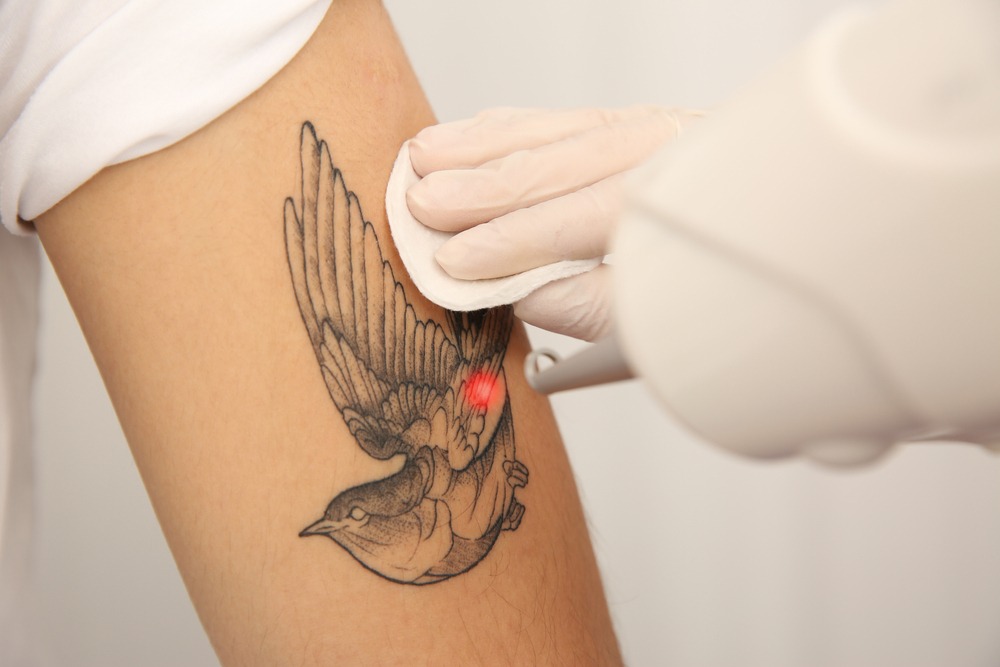
A typical visit is short. Your provider cleans the area, you wear protective eyewear, and they may offer a numbing option to improve comfort. The laser is passed over the tattoo, and many people describe the sensation as a quick snap, like a rubber band. Treatment of a small tattoo can take only minutes.
Afterward, expect redness, swelling, and possibly blistering or scabbing. Cool compresses, gentle cleansing, ointment if advised, and careful sun protection help the area heal. Do not pick at scabs, since this raises the risk of scarring or pigment changes. For a full healing guide, see our laser tattoo removal aftercare guide.
Tips That May Help Your Results
To improve your tattoo removal results, follow the tips below:
- Protect the skin from the sun before and after treatment.
- Stay hydrated and keep healthy habits, since your body does the clearing.
- Follow your provider’s aftercare instructions closely.
- Do not rush the interval between visits.
- Avoid fresh tans on the area to be treated.
- Be patient. Gradual fading is normal.
Questions to Ask at Your Consultation
Coming prepared makes the visit more useful. Consider asking:
- How does my tattoo’s ink and location affect the plan?
- Is my goal full fading or lightening for a cover-up?
- What is the recommended interval between visits?
- What aftercare will I need, and what should I avoid?
- What are the risks for my skin type?
Bring photos of the tattoo’s history if you have them, and mention any past removal attempts.
Can a Tattoo Be Removed Completely?
Many tattoos can fade significantly, but we can’t promise complete removal. Some inks, especially certain colors, may leave a faint shadow, and skin texture or pigment can be slightly different afterward. A consultation helps set honest expectations before you commit.
FAQs
Discomfort varies by person and body area. Your provider can discuss comfort options.
When done properly and followed with good aftercare, scarring is uncommon, but your provider will review the risk with you.
Many people lighten a tattoo first so a new design sits better. Talk with both your provider and your tattoo artist.
Most people return to normal activity, though the area needs care while it heals.
Start With a Consultation
The most accurate answer comes from someone who can see your tattoo. Spade Skin Care is a physician-led medical spa serving the South Bay, and we offer laser tattoo removal at both of our locations. Learn more or book Laser Tattoo Removal in El Segundo or Redondo Beach. Your provider will examine your tattoo, discuss your goals, and provide a personalized estimate.

- Mon-Sat: 9 AM - 5 PM Sunday: Closed
- Mon-Sat: 9 AM - 5 PM Sunday: Closed
- 415 N. Crescent Dr. Suite 370 Beverly Hills, CA, 90210
- Mon-Fri: 9 AM - 5 PM Sat-Sun: Closed
Disclaimer: Spade Med Spa provides surgical consultations, patient education, surgical care coordination, and non-surgical aesthetic services only. All surgical procedures are performed by Dr. Neil Vranis at accredited surgical facilities in the Beverly Hills area and are not performed at Spade Med Spa. This content is for informational purposes only and does not constitute medical advice. Individual results may vary.
© 2011-2026 Spade Skin Care. All rights reserved.